
The Five Things a Trading Platform Has to Do Before Skill Starts Mattering
Access to global markets is the easy part; the tools bolted to that access determine how well anyone can read a price and control a loss under real conditions.
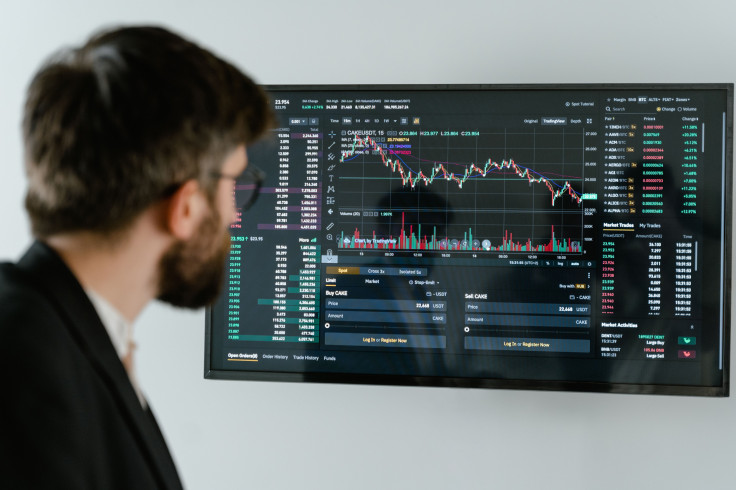
A trading platform is usually chosen on what it lets you reach. That is the least interesting thing about it.
What determines outcomes is the equipment built around the access. Where those tools are missing or half-finished, the workaround is always the same: a patchwork of external software and browser tabs, which costs time and leaves gaps in the workflow exactly where attention is most expensive.
Five categories make up the baseline. Each addresses a different stage of the process, and a platform missing any of them puts the user at a disadvantage that skill does not fully offset.
Execution, and who it is routed through
Speed affects outcomes directly. For any strategy that depends on precise entry and exit, delays of even a few hundred milliseconds produce slippage, where the price filled differs from the price intended.
Low-latency execution matters, and so does transparent order routing, which is the less discussed half. Straight-through processing sends an order directly to liquidity providers without the platform intervening, which removes the conflict of interest inherent in a venue that can take the other side.
The consequence of getting this wrong is behavioural rather than mechanical. A trader who does not trust the execution layer hesitates on entries and exits, and that hesitation carries its own cost.
A trade entered without a defined exit plan is a gamble
Charting that does not require leaving the chart
Technical analysis remains the most common way of reading price movement, and the requirement is multi-timeframe charting with a broad set of built-in indicators.
Moving averages, RSI, MACD, Bollinger Bands and volume oscillators are the minimum rather than the offering. Drawing tools count equally: trendlines, Fibonacci retracements, horizontal support and resistance, channel markers.
The test is whether overlaying indicators and switching timeframes happens inside one window. Anyone who has to leave the chart to reach another tool loses both context and time, and during a fast session both are money.
Risk tools that work without you
A trade entered without a defined exit is a gamble. The four mechanisms that prevent that are standard and should be present without argument.
- Stop-loss orders close a position automatically once price moves against it by a set amount
- Take-profit orders do the reverse, closing once a specified gain is reached
- Margin alerts warn when account equity approaches critical thresholds, leaving time to reduce exposure or add funds
- Trailing stops move the stop level as price moves favourably, so gains already on the table are not left unprotected
These are mechanical safeguards, and their purpose is to remove hesitation from decisions that have to be made quickly, particularly in volatile conditions when instinct tends to override the plan.
Data, and knowing when
Every decision depends on what is known and when it is known.
Live price feeds with minimal lag are the starting point, for the obvious reason that analysis built on a screen that does not match the market is flawed from the first step.
An integrated economic calendar is equally necessary. Central bank rate decisions, employment reports, inflation prints and GDP releases move markets on a schedule that is published in advance, and anyone who can see those events coming can adjust exposure before the number lands.
News feeds carrying commentary and breaking updates close the remaining gap. When pricing, scheduling and news all sit in one interface, a reaction does not require cycling through tabs.
Working away from the desk
Trading does not keep office hours, and a platform that works properly on only one kind of device is a constraint on anyone who needs to check a position, adjust a stop or answer an alert while away from a screen.
Desktop applications give the most room for analysis and multi-window layouts. Web terminals open anywhere with no installation. Mobile handles order placement and monitoring on the move.
What actually ties those together is synchronisation. Watchlists, chart templates, saved layouts and order presets have to carry across devices, or the phone becomes a worse version of the desk rather than an extension of it.
Charting drives the analysis. Execution determines the fill. Risk tools enforce the discipline. Data sharpens the timing. Sync removes the access barrier. Miss one, and no amount of skill entirely compensates.
More from Money

Three Tax Savings Investors Miss Because Their Adviser Was Never Trained on Tax
Almost every financial decision carries a tax consequence, and a great many advisers hold no credential that covers it.

English Mayors Are Getting an Uncapped Tourist Tax and 130 Million Overnight Stays to Levy It On
The charge will apply to hotels, guesthouses and holiday lets, will not be limited by central government, and lands in a year when accommodation…