
How to Prepare a Child for a Funeral, Starting With Not Saying Passing Away
Young children need something tangible to understand what has happened, and the gentle language adults reach for is usually the thing that confuses them most.
Death is an impossible subject for everyone, and hardest of all for children, for whom it is so unimaginable that the youngest often need something concrete before they can grasp what has occurred.
Which is why the vocabulary adults instinctively reach for tends to make it worse. Passing away. Going to heaven. Gone to sleep. Each is chosen to soften the blow and each leaves a child holding a euphemism instead of a fact.
Why take them at all
The case for including children is not that a funeral is pleasant. It is that a ritual makes death manageable as well as comprehensible.
A funeral creates a space in which mourning and remembering are the expected activities rather than embarrassing ones. When children watch adults express grief through tears and then ease it through company, they are learning a sequence they can use themselves later.
That is a genuine education, and it is difficult to deliver any other way.
None of which requires exposing a child to everything. Seeing a body is not necessary. Coffins can be very hard, particularly a coffin that disappears into a furnace, and for a young child that can be too much.
The grand spaces are not meant to be oppressive. They reflect the greatness of the emotions
Preparation lowers the intensity
A funeral is intense for anyone, and most of all when it is the first, when you are small, and when you loved the person who died. Nearly all of that can be reduced by preparation.
Explain the day in advance. What will happen, in what order, and roughly how long it will take.
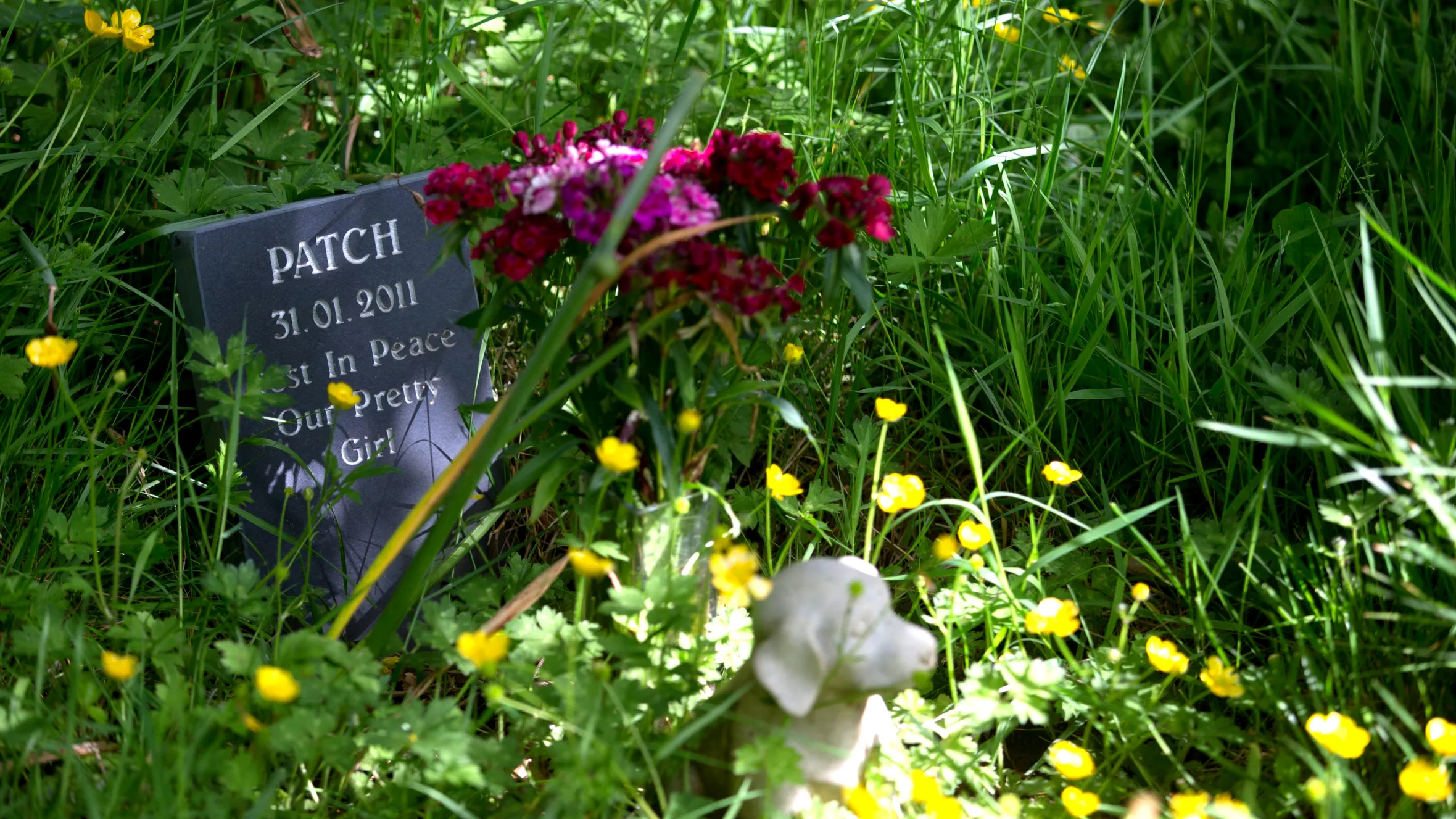
Use a pet's funeral as a rehearsal. Holding a proper ceremony when an animal dies introduces the components in a manageable form: a eulogy, music, candles, photographs, flowers, and the particular feeling of everyone standing together doing one thing.
Visit the building beforehand. Many families do not go to churches often, and a large cold one entered for the first time on the worst day of a child's life is intimidating. Take them to see it first, and explain that the scale is not there to oppress anyone. It reflects the size of the feelings the building was made to hold.
Play the music. Listen to what has been chosen before the day, and talk about why. Music is often the most direct route back to a person. It also releases emotion when it is needed and provides comfort when the sadness becomes too much. Across a whole service it works as a kind of narrative spine: memory, then sadness, then completion.
Give them a job. A drawing or a letter that can be displayed or kept in a memory album. Lighting the candles at the start and putting them out at the end. Participation converts a child from a spectator into a mourner, which is a better thing to be.
Talking about what other people do
Religion, whatever one's own position on it, handles this material better than most institutions, offering a framework for thinking about body and soul, transience and permanence. For families who believe, the Christian account of an afterlife is a substantial comfort.
For those who do not, there is another route in, which is simply telling a child how differently people do this elsewhere.
Tibetan Buddhists practise sky burial. Nordic traditions include water burials. In China, cardboard replicas of the things the dead person loved are burnt, so a mourner might send a box of paper cigarette packets and whisky bottles. In Ghana, people are buried in elaborate fantasy coffins, brightly coloured animals or vehicles or objects chosen to reflect the individual. In New Orleans, the jazz band accompanying a procession plays solemnly on the way to the church and raucously on the way back.
Told to a child, those are not morbid. They are evidence that everybody has to do this, that every culture has invented something for it, and that the strange day they are being asked to attend is one version of a very old and very human arrangement.
More from Lifestyle

Four New Insect Species Have Been Named After Taylor Swift, and One Is Called Poetorum
A doctoral student at Riverside spent years identifying specimens that had sat in a drawer since the early 2000s, and named the genus she found…

When One Sibling Does All the Caring, Geography Gets Blamed for a Choice
The resentment felt by the adult child who lives nearest is entirely reasonable, and the way out of it is a specific conversation rather than a…

The Mistake Parents Make About Reading Is Telling Children It Is Good for Them
A children's author who spent eight years teaching says books have to compete as entertainment, and that pitching them as self-improvement guarantees…