
Gloria Steinem Has Died at 92, and Her Last Instruction Was That the Circles Continue
The writer who turned a magazine into a movement was still hosting organising meetings in her own front room, and left word that the practice should outlive her.
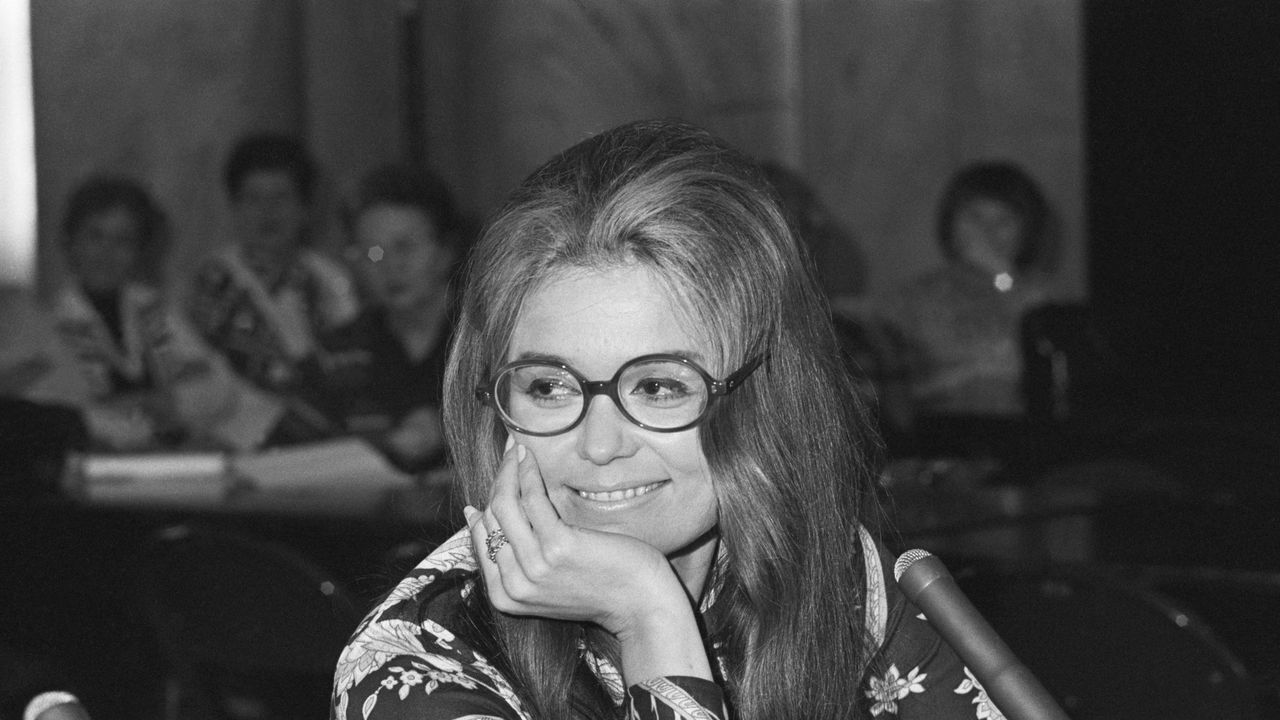
Gloria Steinem died on September 2 at her home in New York City, at the age of 92. A statement from her foundation said she passed away peacefully, surrounded by some of the many who loved her. No cause of death has been confirmed.
"Gloria's near-century on earth were years well-lived, and she continued working for equality until the very end," the announcement read.
What it said next is the part worth keeping. Her greatest gift, it said, was her ability to listen to others, and to make them feel seen and heard. Her words and her example gave people permission to be their truest selves. She lived true to an independent spirit, with curiosity and a considerable sense of humour.
She kept working in her own front room
Her later years were given to community and to writing, which the statement describes as the two things she loved most.
She continued to host talking circles in her home. The talking circle is an ancient practice and a foundational method of grassroots organising, and she insisted the tradition would continue after she was gone.
Mourners have been asked to light candles as one global and celestial community circle, and, instead of flowers, to donate to her foundation.
Steinem had already written her own closing line. In a memoir published later this month, An Unexpected Life, she wrote that she had lived for more than fifty years in her brownstone, in rooms that had witnessed lives before hers, and would know others after she was gone.
Change is like a house. You can't build it from the top down, only from the bottom up
Toledo, and then a magazine
She was born in Toledo, Ohio on March 25, 1934. Her parents divorced while she was young and she was left caring for a mother in poor mental health. She went to Smith College and read government, then to New York to work as a journalist.
In 1968 she became a founding editor of New York magazine. In 1971 she co-founded Ms as an insert inside it, before it became a publication in its own right, and stayed on staff for fifteen years.
Ms changed the media landscape by taking positions the rest of the industry would not. It was openly pro-choice, and it reported on domestic violence, workplace discrimination and date rape at a time when none of those had settled names, let alone coverage. It also widened as it grew, carrying Maya Angelou, Angela Davis and Alice Walker.
The piece that made her famous came earlier. In 1963 she went undercover as a Playboy bunny and reported the working conditions for servers in Hugh Hefner's clubs. She also wrote for Vogue, including a dispatch from Truman Capote's Black and White Ball in 1967.
The organising, which was the other half
Steinem is credited with igniting and holding together second-wave feminism, the movement of the 1960s and 1970s that permanently altered how women's political, economic and social power was discussed in the West.
She did not do it only in print. In 1972 she founded the National Women's Political Caucus alongside the congresswomen Bella Abzug and Shirley Chisholm, and the writer Betty Friedan. She established Take Our Daughters to Work Day. She co-founded the Women's Media Center in 2004. She published a bestselling memoir, My Life on the Road, in 2015.
The method, in her own words
Her most quoted line is also the most accurate summary of how she worked.
"Change is like a house," she said. "You can't build it from the top down, only from the bottom up. Whatever small change we make will be like a pebble in a pond; it will reverberate outward."
That is not a sentiment. It is a description of a technique, and it explains why a woman who could command any platform in the country spent her last years sitting in a circle in her own living room with whoever turned up.
She left instructions for the circles to continue. On her own theory of how anything actually changes, that is the more consequential half of the estate.
More from Lifestyle

Four New Insect Species Have Been Named After Taylor Swift, and One Is Called Poetorum
A doctoral student at Riverside spent years identifying specimens that had sat in a drawer since the early 2000s, and named the genus she found…
How to Prepare a Child for a Funeral, Starting With Not Saying Passing Away
Young children need something tangible to understand what has happened, and the gentle language adults reach for is usually the thing that confuses…

When One Sibling Does All the Caring, Geography Gets Blamed for a Choice
The resentment felt by the adult child who lives nearest is entirely reasonable, and the way out of it is a specific conversation rather than a…